Best tents for two people
Most two-person tents fit two people only in the sense that two sleeping bags will physically go in. The measurements to check before you buy.
3 products ranked Updated
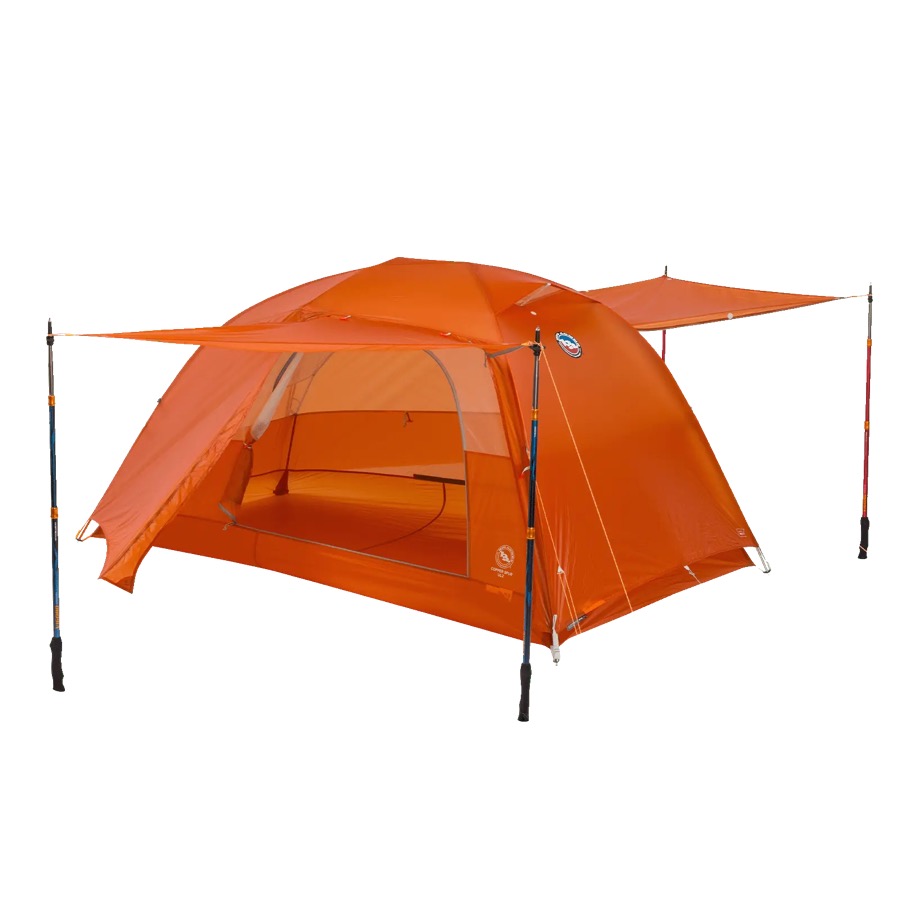
Our rankings are built from published testing by named outlets, not from our own lab. We earn a commission when you buy through our links, and it never changes the order.
The short answer
- 1 Big Agnes Copper Spur UL2 Best two-person tent $599.95
- 2 Big Agnes Copper Spur UL3 Buy this if two of you actually want room $649.95
- 3 Nemo Dragonfly OSMO 2 Best if weight and price matter more than space $499.95
Prices checked 9 September 2026. They move constantly — the retailer's own page is the authority.
Big Agnes Copper Spur UL2
4 / 5
Our reading of OutdoorGearLab — 81/100 and a Top Pick , 2026
The highest-scoring genuine two-person tent in the test, and at 29 square feet the roomiest of the three here. Two and a half pounds for a freestanding double-wall tent is the reason it costs $600. Price and image verified on Big Agnes' own store today.
Pros
- 81/100 in a test that weights livability highest
- 29 sq ft — the largest floor of our three
- 2.56 lb trail weight for a freestanding double-wall tent
Cons
- $599.95 is the most you can sensibly spend on a two-person tent
- Ultralight fabrics need care with grit and boots
Where these findings come from
- OutdoorGearLab: 81/100 and a Top Pick; 29.0 sq ft floor at 2.56 lb trail weight
Big Agnes Copper Spur UL3
4.5 / 5
Our reading of OutdoorGearLab — their Editors' Choice , 2026
The argument this guide makes is that most two-person tents fit two people only in the sense that two mats will physically go in. Here is the practical answer: buy the three-person version. It is the Editors' Choice, it is $50 more, and it is the difference between sleeping beside someone and sleeping against them. NO PHOTOGRAPH here on purpose — Big Agnes publishes the same product image for the UL2 and the UL3, byte for byte, and showing you a two-person tent labelled as the three would be a small lie.
Pros
- Editors' Choice — the highest award in the test
- Genuinely fits two adults with kit, which the UL2 does not
- Only $50 more than the two-person model
Cons
- Heavier and bulkier to carry
- No usable photograph distinct from the UL2
- $649.95
Where these findings come from
- OutdoorGearLab: named Editors' Choice, above the two-person model
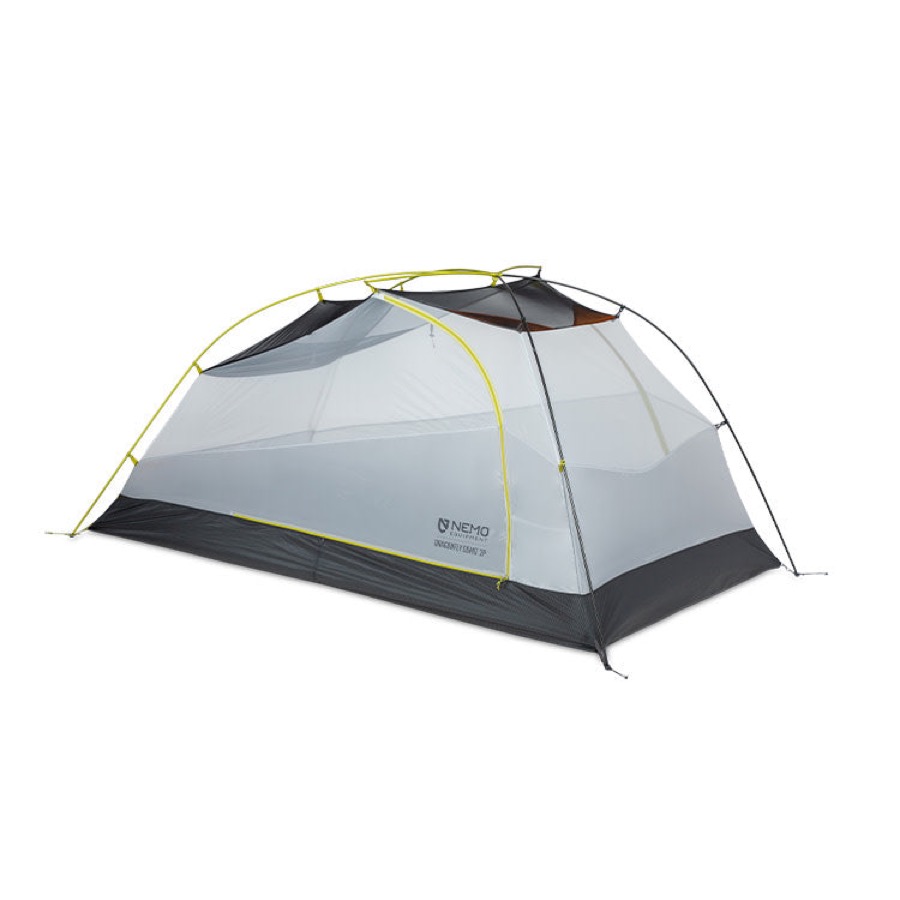
Nemo Dragonfly OSMO 2
3.5 / 5
Our reading of OutdoorGearLab — 76/100 , 2026
A hundred dollars cheaper than the Copper Spur UL2 and three and a half square feet smaller — which, on a floor this size, you will feel. It scores five points lower and weighs slightly more. Take it if the price difference matters; take the Copper Spur if the two of you are tall.
Pros
- $100 less than the UL2
- Price and image verified on NEMO's own store
Cons
- 25.6 sq ft — the smallest floor here, and it is a two-person tent
- Heavier than the UL2 despite being smaller
- 76/100, the lowest of the three
Where these findings come from
- OutdoorGearLab: 76/100; 25.6 sq ft floor at 2.89 lb trail weight
What actually matters
Floor width, measured. A great many two-person tents are around 120 cm wide. Two standard sleeping mats are 51 cm each, so that works only if nothing else goes between you. Look for 130 cm and up if you want to sleep without touching.
Length against your height. A 210 cm floor sounds ample until you add a pillow and a sloping end wall. If you are over 180 cm, check the wall angle, not just the number.
Vestibule space. Boots and packs have to go somewhere that is not your sleeping area. A tent with no vestibule means wet gear inside with you.
Hydrostatic head, and where it applies. The floor takes more water pressure than the fly, because you kneel on it. A 3000 mm floor with a 1500 mm fly is a sensible combination; the reverse is not.
Where this comes from
We do not test tents. Our source has bought and tested over 100 since 2012 and took the current 12 from the forests of Maine to the high desert of Utah to the Sierra Nevada, weighting livability at 35% and weather resistance at 25%.
Livability being their heaviest metric is why we can use them for this guide: it is roughly the question in our title. Floor areas below are the makers' own published figures, which is the only place they exist — nobody measures a tent floor independently, so treat them as claims by the manufacturer rather than as findings.
What we are leaving out
Anything above four kilograms, which is a car-camping tent, and single-skin tents, which condense badly in temperate weather.
Where this comes from
We did not test these. These people did.
Every score on this page rests on the testing below. The ranking is ours; the measurements are not. How we research.
- OutdoorGearLab — Over 100 tents bought and tested since 2012; the current 12 taken from Maine forest to Utah desert to the Sierra Nevada. Scored on livability (35%), weather resistance (25%), weight, packed size and durability.
Questions people ask
Is a three-season tent enough?
How much does weight matter?
More guides
Best packing cubes
What packing cubes actually buy you, what they do not, and the one component that decides whether a set lasts a year or five.
5 picks Updated
Best carry-on luggage
Cabin allowances, wheels, and the part that actually breaks. What to weigh up before you buy, and how we will decide the ranking.
4 picks Updated
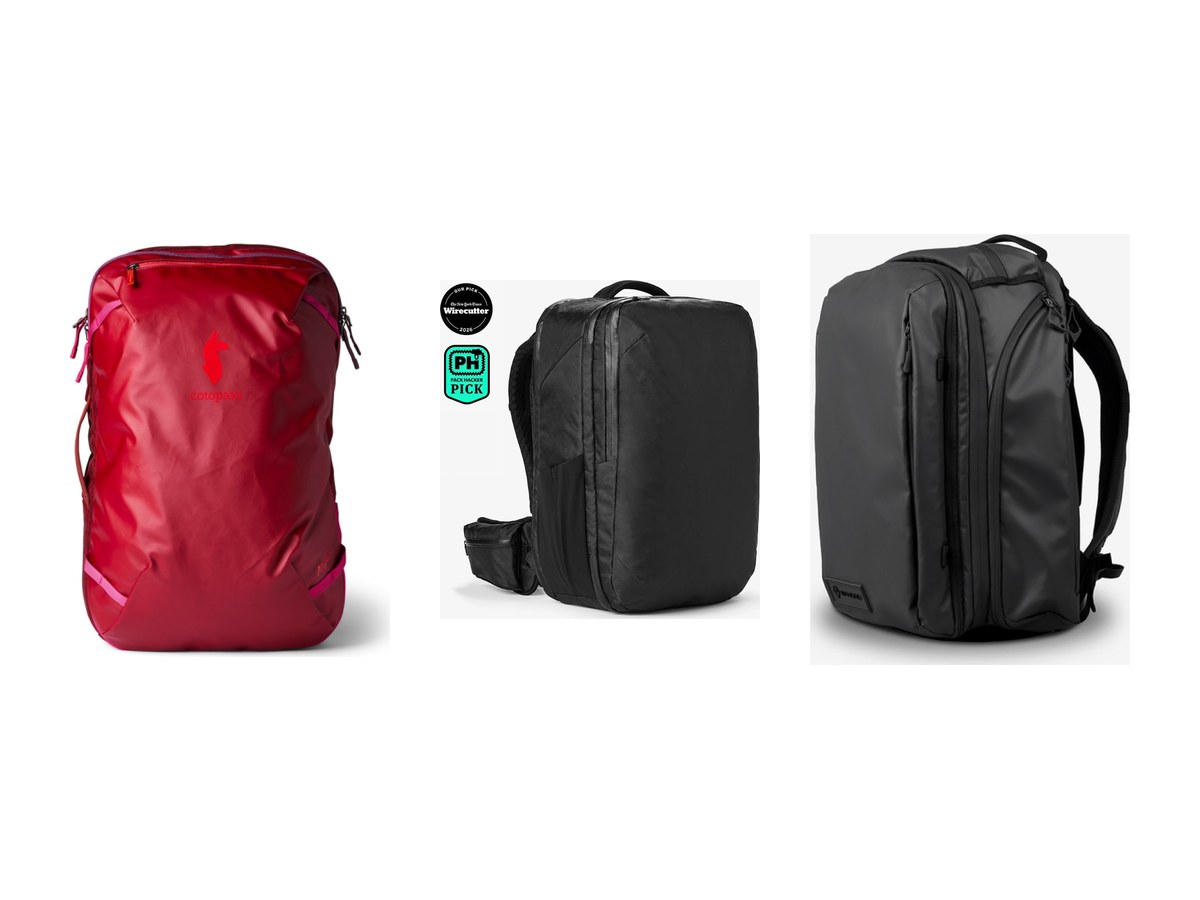
Best travel backpacks for a one-bag trip
Carrying a week on your back means trading capacity against the cabin allowance. The measurements that decide it, and how we will rank them.
3 picks Updated