Best knife sharpeners you won't ruin an edge with
A bad sharpener does more harm than a dull knife. Match the sharpener to your knife's edge angle, choose diamond, and avoid the rolling gadgets.
4 products ranked Updated
Our rankings are built from published testing by named outlets, not from our own lab. We earn a commission when you buy through our links, and it never changes the order.
The short answer
- 1 Chef’sChoice Pronto 463 Diamond Hone Manual Sharpener Best for most kitchens $49.99
- 2 Chef’sChoice Trizor 15XV Electric Sharpener Best if a knife is damaged $179.99
- 3 AccuSharp Gourmet Series 15 Degree Knife Sharpener Cheapest that works $12, per America's Test Kitchen
- 4 Chef’sChoice Model 130 Electric Sharpener For 20-degree Western knives $150, per America's Test Kitchen
Prices checked 14 September 2026. They move constantly — the retailer's own page is the authority.
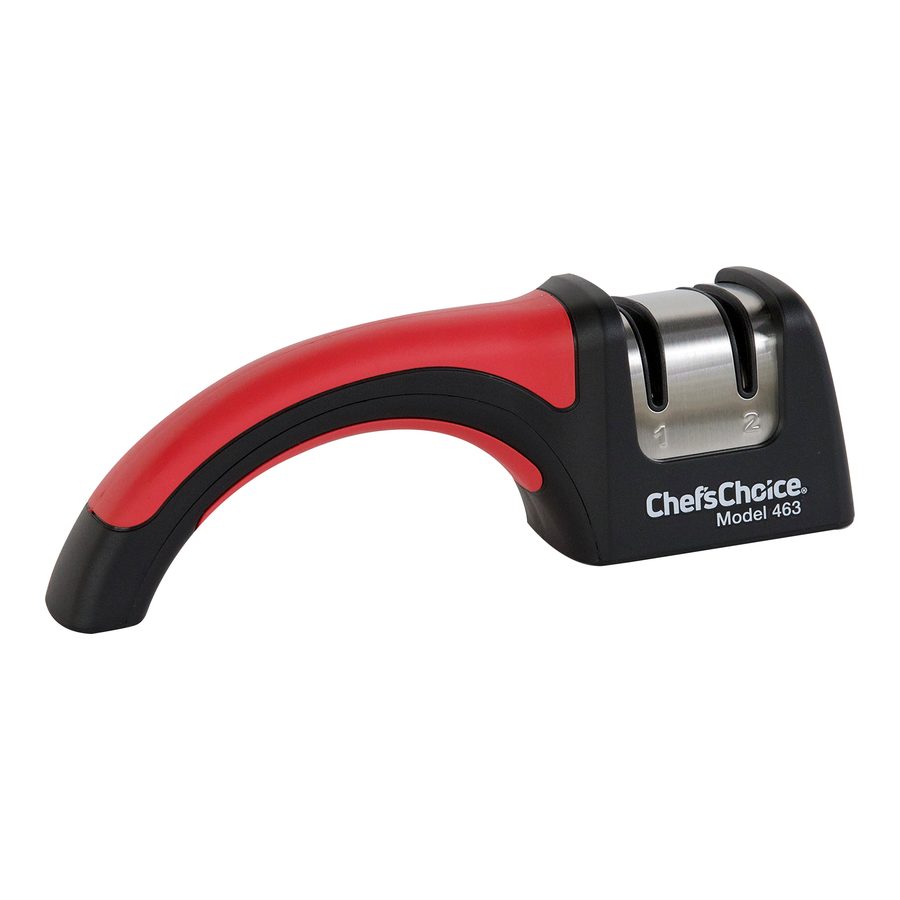
Chef’sChoice Pronto 463 Diamond Hone Manual Sharpener
4.5 / 5
Our reading of America's Test Kitchen, manual sharpeners — Highly Recommended and their winner for 15-degree knives , 2025
Two slots of diamond abrasive, one to sharpen and one to polish, set deep enough that the knife cannot wander off its angle. That depth is the whole reason it will not wreck an edge: the sharpeners that failed this test had shallow slots that let the blade wobble. It lives in a drawer and needs no power. It will not fix a chipped blade. For that you need the electric pick below.
Pros
- Deep slots hold the angle for you
- Diamond abrasives in both stages
- Small, quiet, no power needed
Cons
- Light cosmetic scratches on the blade sides
- Cannot repair chips
- For 15-degree knives only
Where these findings come from
- America's Test Kitchen, manual sharpeners: Highly Recommended, winner for 15-degree knives; quickly put a keen edge on; deep V-shaped slots make the angle easy to hold; coarse then fine diamond
- America's Test Kitchen, manual sharpeners: the sides of the blade became slightly scratched, which does not affect performance
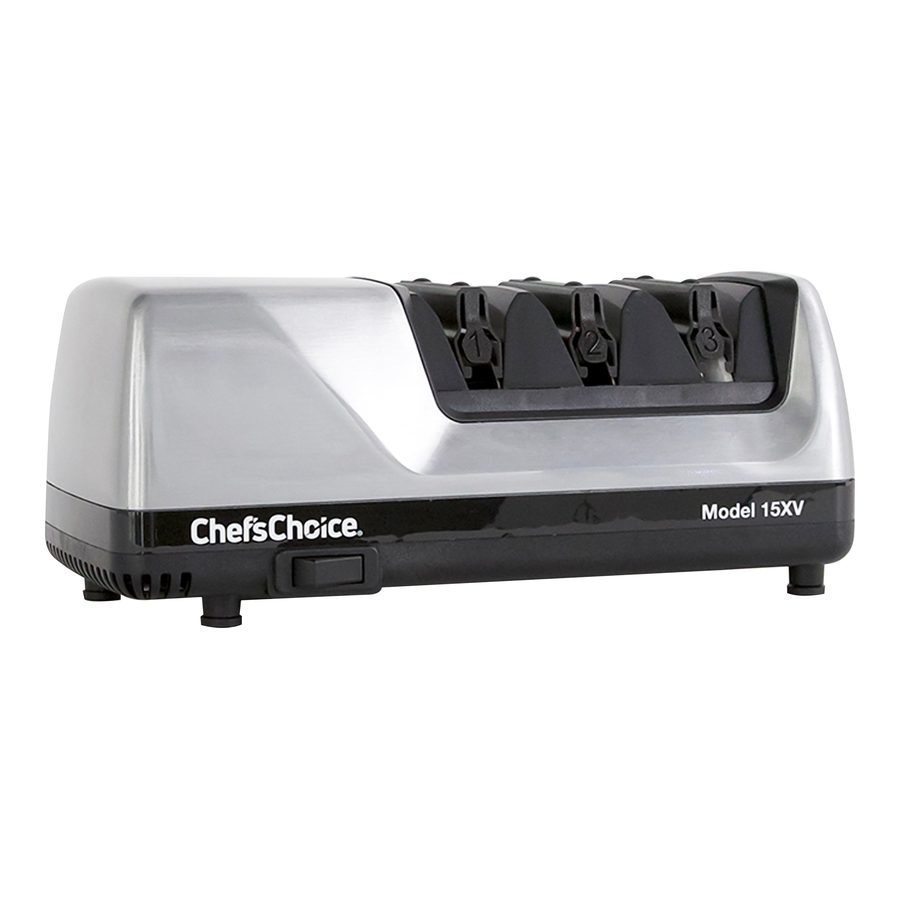
Chef’sChoice Trizor 15XV Electric Sharpener
4.5 / 5
Our reading of America's Test Kitchen, electric sharpeners — Highly Recommended and their winner for 15-degree knives , 2025
Our source cut a notch in a knife to fake a chip, and this machine ground it out quickly without leaving the blade worse. That is the thing a manual sharpener cannot do, and it is the argument for spending $180. It also turns a dull knife sharp in about two minutes through three spring-loaded slots. Their warning about the category is worth repeating: many electric sharpeners chew blades up. This one is the exception they found.
Pros
- Repaired a chipped edge in testing
- About two minutes to a polished edge
- Spring guides hold the angle
Cons
- $179.99
- Light cosmetic scratches on the blade sides
- Removes more metal than a manual touch-up, so use the coarse slot sparingly
Where these findings come from
- America's Test Kitchen, electric sharpeners: Highly Recommended, winner for 15-degree knives; about 2 minutes to a polished, razor-sharp edge; spring-loaded slots keep the angle consistent
- America's Test Kitchen, electric sharpeners: rapidly removed a notch cut into the blade to simulate a chip; sharpened both a regular and a carbon-steel chef’s knife; light cosmetic scratches
AccuSharp Gourmet Series 15 Degree Knife Sharpener
4 / 5
Our reading of America's Test Kitchen, manual sharpeners — Recommended and their Best Buy for 15-degree knives , 2025
Very fast and $12, and it gets a dull knife properly sharp. The catch showed up under the microscope: the edge it leaves is rough rather than polished, and our source finished each knife on a honing rod. It is also drawn over the exposed blade, which feels unnerving until you are used to it. A good choice for a spare knife or a holiday rental, and a reason to own a honing rod. No photograph: AccuSharp's site lists a different 15-degree model under a similar name, so we could not confirm which page is this one.
Pros
- Dull to sharp in seconds
- Reversible blades double its life
Cons
- Leaves a rough, toothy edge that needs honing
- Drawn over an exposed blade
- No photograph and a quoted price
Where these findings come from
- America's Test Kitchen, manual sharpeners: Recommended, Best Buy for 15-degree knives; took a completely dull knife to razor sharpness in seconds
- America's Test Kitchen, manual sharpeners: under a microscope the edge was ragged, which professionals call toothy; they used a honing rod afterwards; tungsten carbide blades are reversible
Chef’sChoice Model 130 Electric Sharpener
4.5 / 5
Our reading of America's Test Kitchen, electric sharpeners — Highly Recommended and their winner for 20-degree knives , 2025
If your knives are older European ones with a 20-degree edge, a 15-degree sharpener is the wrong tool, and this is the right one. The last of its three slots does the job of a honing rod without the technique. No photograph and a quoted price: the Chef’sChoice page for this model now redirects to a different sharpener.
Pros
- Built for 20-degree edges
- Final slot hones for you
- Handles serrated knives
Cons
- Light cosmetic scratches
- No photograph and a quoted price
Where these findings come from
- America's Test Kitchen, electric sharpeners: Highly Recommended, winner for 20-degree knives; three spring-loaded guides; diamond wheels; the final slot works like a honing rod
- America's Test Kitchen, electric sharpeners: light cosmetic scratches; fairly quiet; also handles serrated and single-bevel blades
How a sharpener ruins a knife
Our source's microscope photographs make the point better than any description. A good sharpener leaves a smooth, even edge. A bad one leaves an edge that is ragged, uneven along its length, or never actually sharp however many times you pull the knife through, while quietly removing steel each time.
Three things caused the damage in testing:
Shallow slots. A slot under about half an inch deep lets the blade wobble, so the angle changes stroke to stroke and the edge ends up uneven.
The wrong abrasive. Carbide and ceramic grab at the steel and leave a rougher edge. Diamond glides and leaves a cleaner one. Every top pick below uses diamond or pairs carbide with honing.
Rolling sharpeners. Both tested had a cylinder too short to reach the heel and tip of an ordinary chef's knife, so the middle got sharpened and the ends did not. Neither made the knife sharper.
Know your edge angle first
Japanese-style knives are usually sharpened to about 15 degrees each side, traditional European knives to about 20, though many Western makers have moved to 15. Use a sharpener built for your knife's angle. Grinding a 20-degree knife to 15 removes a lot of steel, and the maker's website or manual will tell you which you have.
Sharpening is not honing
A honing rod straightens an edge that has rolled over in use, and takes a few seconds. Sharpening removes steel to make a new edge. Hone often, sharpen when honing stops working.
Where this comes from
We do not test sharpeners. Our source dulled identical chef's knives and sharpened them on each model, repeated the test on harder carbon steel, cut a notch in a blade to see which electric models could repair it, and examined the results under a microscope.
What we are leaving out
Whetstones, which give the best edge of all but take practice, and adjustable-angle systems costing $250 and up, which suit enthusiasts with unusual knives.
Where this comes from
We did not test these. These people did.
Every score on this page rests on the testing below. The ranking is ours; the measurements are not. How we research.
- America's Test Kitchen, manual sharpeners — New chef’s knives dulled and resharpened on each model, repeated on a harder carbon-steel knife for the good ones; edges examined under a microscope for smoothness and damage. Updated July 2025.
- America's Test Kitchen, electric sharpeners — Each machine assigned its own copy of the same chef’s knife for the whole test; sharpness judged on paper and ripe tomatoes, and a notch cut into the blade to see which could repair a chip. Updated June 2025.
Questions people ask
How often should I sharpen a kitchen knife?
Can these sharpen serrated knives?
More guides
Best packing cubes
What packing cubes actually buy you, what they do not, and the one component that decides whether a set lasts a year or five.
5 picks Updated
Best carry-on luggage
Cabin allowances, wheels, and the part that actually breaks. What to weigh up before you buy, and how we will decide the ranking.
4 picks Updated
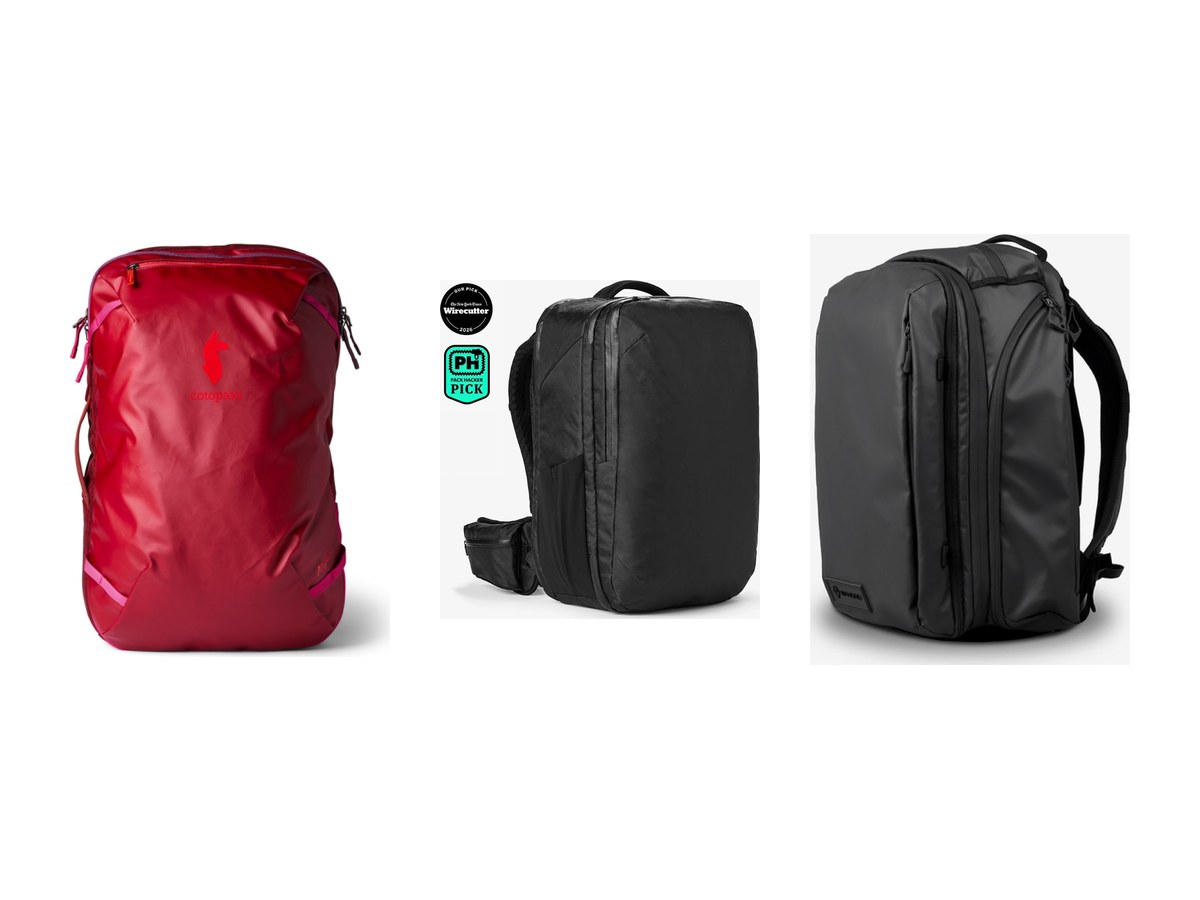
Best travel backpacks for a one-bag trip
Carrying a week on your back means trading capacity against the cabin allowance. The measurements that decide it, and how we will rank them.
3 picks Updated